

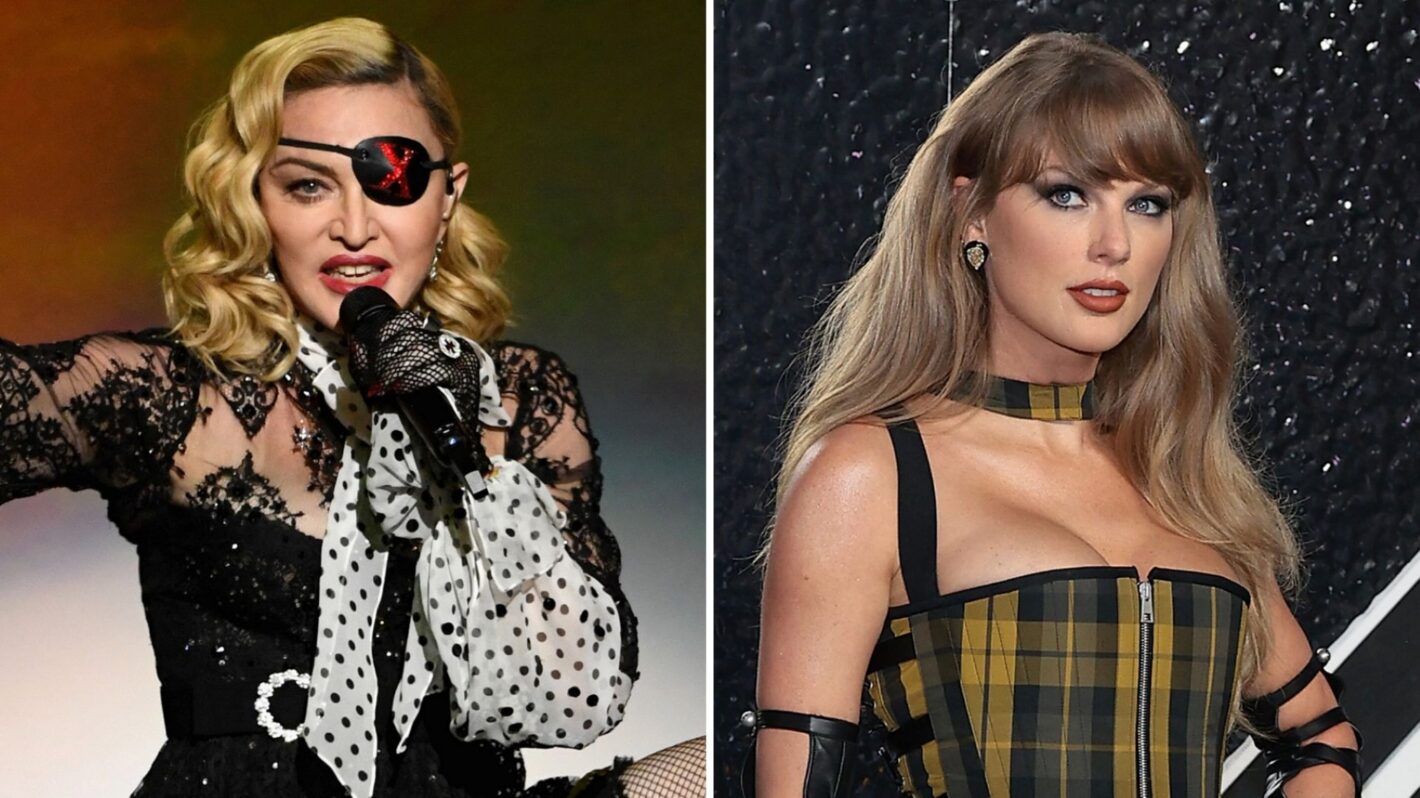
TWO GENERATIONS. ONE POP THRONE.
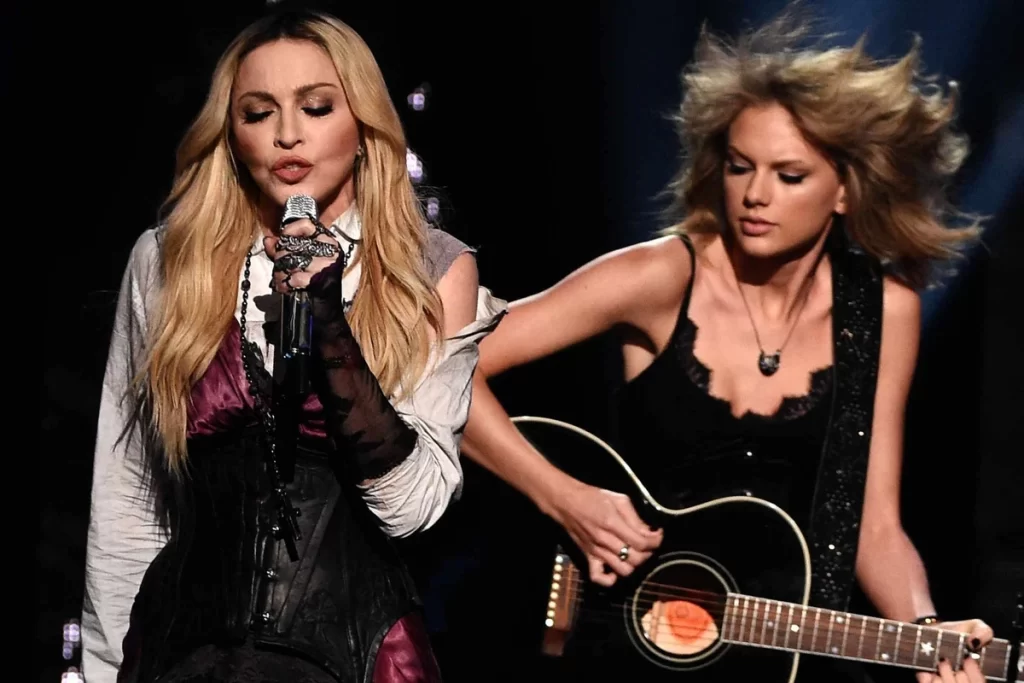
The 2026 MTV Video Music Awards are setting up one of the most interesting pop-culture conversations of the year.
Madonna leads this year’s nominations with 11, while Taylor Swift follows with nine. Ariana Grande and Sabrina Carpenter received seven nominations each, while Bruno Mars, PinkPantheress, and Zara Larsson earned five. The ceremony will take place in Los Angeles on September 27, with fan voting running across 13 categories.
On the surface, the headline looks like a competition between two superstars.
In reality, it represents two different eras—and two different business models of global fame.
Madonna built her career through constant reinvention. She understood early that music, fashion, controversy, performance, and visual identity could operate together as one powerful brand. She did not simply release songs. She created cultural moments.
Her 2026 nominations show how rare that level of longevity is. She has now received VMA nominations across every decade of her musical career. A complete sweep this year would place her alongside Beyoncé and Taylor Swift among the most-awarded musicians in the history of the ceremony.
Taylor Swift represents a different form of power.
Her success is built not only on music but also on fan participation, storytelling, ownership, community, touring, and carefully managed releases. Her audience does not simply consume a product. Fans study clues, discuss lyrics, attend events, defend the brand, and help drive each release across digital platforms.
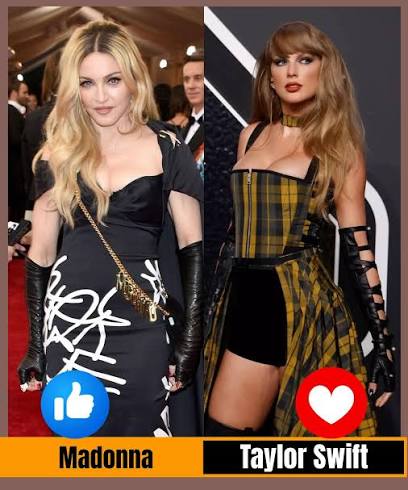
Swift currently shares the record of 30 VMA wins with Beyoncé. According to the Associated Press, even one victory at the 2026 ceremony would make her the most-awarded artist in VMA history.
But the VMAs are not only celebrating established stars.
This year includes 26 first-time nominees, reflecting how quickly music discovery is changing. A new artist can now move from a bedroom recording or viral social clip to an international audience faster than at any previous point in the music industry.
That is why this year’s ceremony matters.
Madonna shows the value of reinvention. Swift shows the value of building an ecosystem. The first-time nominees show the power of digital discovery.
The real winner may be the artist who can combine all three: a strong identity, a loyal community, and the ability to move quickly when culture changes.
The VMAs were created to celebrate music videos. In 2026, they also measure something bigger—the ability to control attention in a world where attention has become the entertainment industry’s most valuable currency.
5. Bangkok’s Concert Ticket Reality Check: When Pop Music Becomes a Luxury
Category: Bangkok / Entertainment Business / Lifestyle
Suggested cover line: WHO CAN STILL AFFORD LIVE MUSIC?
Zara Larsson has started a conversation that many artists normally avoid: the real price of seeing international performers live.
Tickets for her upcoming Bangkok concert at UOB Live are listed between THB 2,800 and THB 3,900, while the VIP option costs THB 9,000. The show is scheduled for November 1 as part of her Midnight Sun Tour.
After fans criticized the prices online, Larsson did something unexpected—she agreed with them.
The Swedish singer acknowledged that the Bangkok tickets were expensive, even when compared with other international concerts in the local market. She said she wanted a cheaper entry level so that more fans could attend and explained that she hoped to become more involved in ticket-pricing decisions during future tours. She also clarified that she does not personally set the current prices.
Her response felt different from a normal celebrity statement because it did not dismiss the audience.
Concert pricing is complicated. International tours must cover venues, stage production, equipment, transportation, local staff, security, marketing, insurance, ticketing systems, taxes, accommodation, and currency risk. Artists, promoters, venues, sponsors, and ticketing companies may all influence the final price.
But complexity does not remove the need for transparency.
Fans usually see one number on a screen. They do not see the complete business structure behind it. When that number feels too high, the artist often becomes the public target—even when several companies were involved in making the decision.
The industry is also selling more than a performance. Concerts have become social experiences, fashion events, fan-community gatherings, and content opportunities. Attendees do not only watch the show. They post outfits, record reactions, buy merchandise, meet other fans, and share the event across social platforms.
This creates demand, but it can also turn music into a luxury product.
A healthier model could include a genuinely affordable entry category, clearly explained VIP benefits, sponsor-supported fan zones, student promotions, early community access, and stronger communication about what is included in each package.
VIP tickets can still exist. Premium customers may want sound checks, exclusive merchandise, better locations, or early entry. The problem appears when almost every option begins to feel premium.
Larsson’s honesty may ultimately help her brand more than a perfectly managed public-relations response. Fans do not expect artists to control every commercial detail. They do expect them to listen.
The Bangkok debate is therefore bigger than one concert.
It raises a basic question for the entire live-entertainment industry: is a concert mainly a high-value commercial product, or should it remain a cultural experience that ordinary fans can realistically access?
The strongest answer is probably both.
A tour must make business sense. But without the fans in the room, there is no show.





Leave a Reply